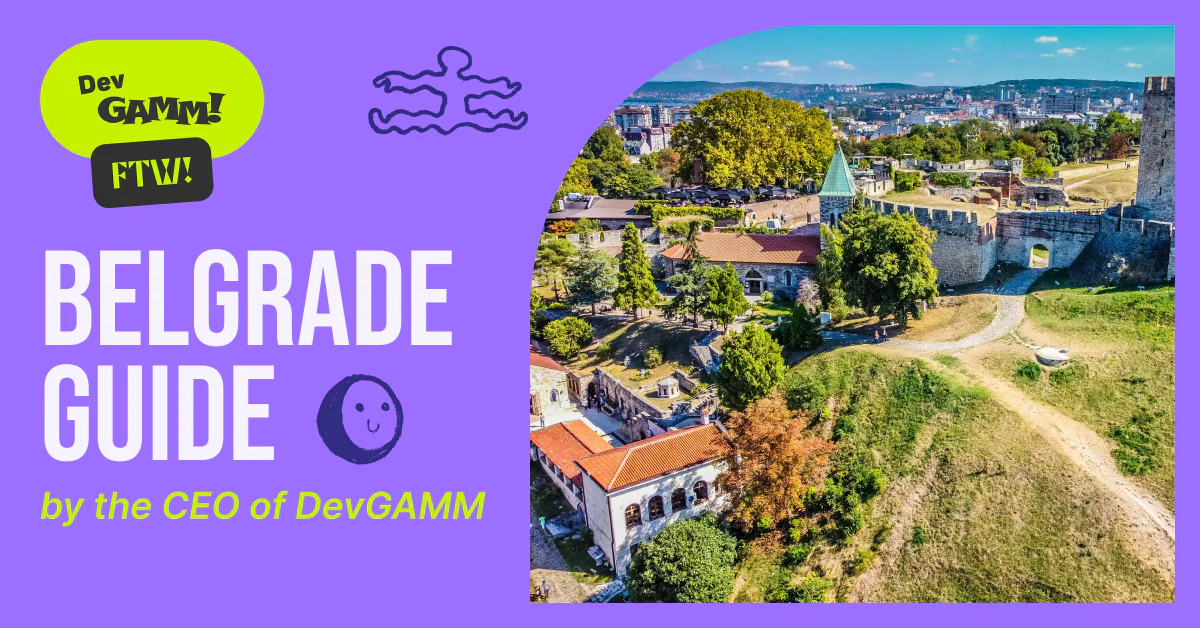
Belgrade Guide by Maria Chyrvona, DevGAMM's CEO
In 2023, I visited Belgrade for the first time. In 2024, I moved to Serbia and started a new chapter in my life. And now, two years later, we are hosting our first DevGAMM conference in Belgrade on September 29–30, 2026.
I write this from an immigrant perspective. I am definitely not a local, and I am also not trying to make this a “10 places you HAVE to visit in Belgrade” type of guide.
I am just a big fan of exploring the restaurant, bar, and coffee scene here. When I started writing this, I realized I had over 200 places saved, and I had absolutely no idea how to fit all of them into one text. So instead, I made a Google Maps list with 50+ places that I really like and added comments with the reasons why!
I will keep adding to it because I am obviously still exploring.
If you want a sightseeing list, there are so many travel guides for Belgrade; personally, I would recommend MapaMag Guides. They can turn out very atmospheric.
One thing to keep in mind: Belgrade is surprisingly hilly, so be prepared for a fair amount of walking uphill and adjust your routes accordingly.
01.People & Language
My favourite thing about Serbia is the locals: they are very open, kind, enjoy small talk, and are always helpful. You’ll have no trouble getting by in English in the city center, but the further you venture out, the more likely you are to need Google Translate.
Good word to learn first: Hvala, which means “thank you”! 🙂
02.Food
Serbian food is very much about meat and honestly I was not prepared for how much meat there would be. You will see pljeskavica, ćevapi, Karađorđeva šnicla, and many other variations of meat cooked on roštilj.
My favourite discovery is probably ajvar. It is a pepper-based spread, and you can basically add it to anything. Meat, bread, cheese… I always bring ajvar as a souvenir to all my friends across the world. Also, you have to try kajmak and šopska salad with your meat.
And one important thing: portions are BIG.
Very often, when I order food, I think “okay, this should be enough for me,” and then the plate arrives, and I understand that I have made a mistake 🙂
You can absolutely share dishes, and you can always take leftovers home.
03.Kafanas
Traditional places to eat and drink in Serbia are called kafanas.
There are so many of them in Belgrade that I honestly don’t think I can tell you which one is “the best”. My personal rule for Serbian food is very simple: don’t look at how fancy the place is. If it is full of locals, it’s probably good.
If there is a line outside a tiny place that looks a little bit questionable, I would probably try it.
This is especially true for Serbian meat-based fast food.
04.Bakeries
Pekara means bakery, and you will see them everywhere. What surprised me when I moved here is that Belgrade has bakeries working 24/7.
I feel like I have discovered two versions of Serbian breakfast:
coffee + cigarette
or
burek/pita + yogurt.
If you go to pekara, I obviously recommend the second one. For example, there is a legendary place next to Hilton called Pekara Trpkovic, which always has a line but is totally worth it!
05. Coffee
Coffee deserves its own section because I think Belgrade is a really good coffee city.
There are traditional cafés where people sit for hours, specialty coffee places, beautiful cafés, tiny neighborhood spots… basically something for every mood on every corner.
I listed some of my favorite places on the map, but I cannot keep track; new ones open every month!
06.Other cuisines
Obviously, you should eat Serbian food when you come to Serbia.
But you don’t have to eat meat for every meal 🙂
Belgrade has a surprisingly good selection of other cuisines as well. Italian, Mexican, Greek, and especially Asian: you will find a lot of great Chinese places, and there is even a big Chinese quarter in Belgrade.
07.Going out & drinks
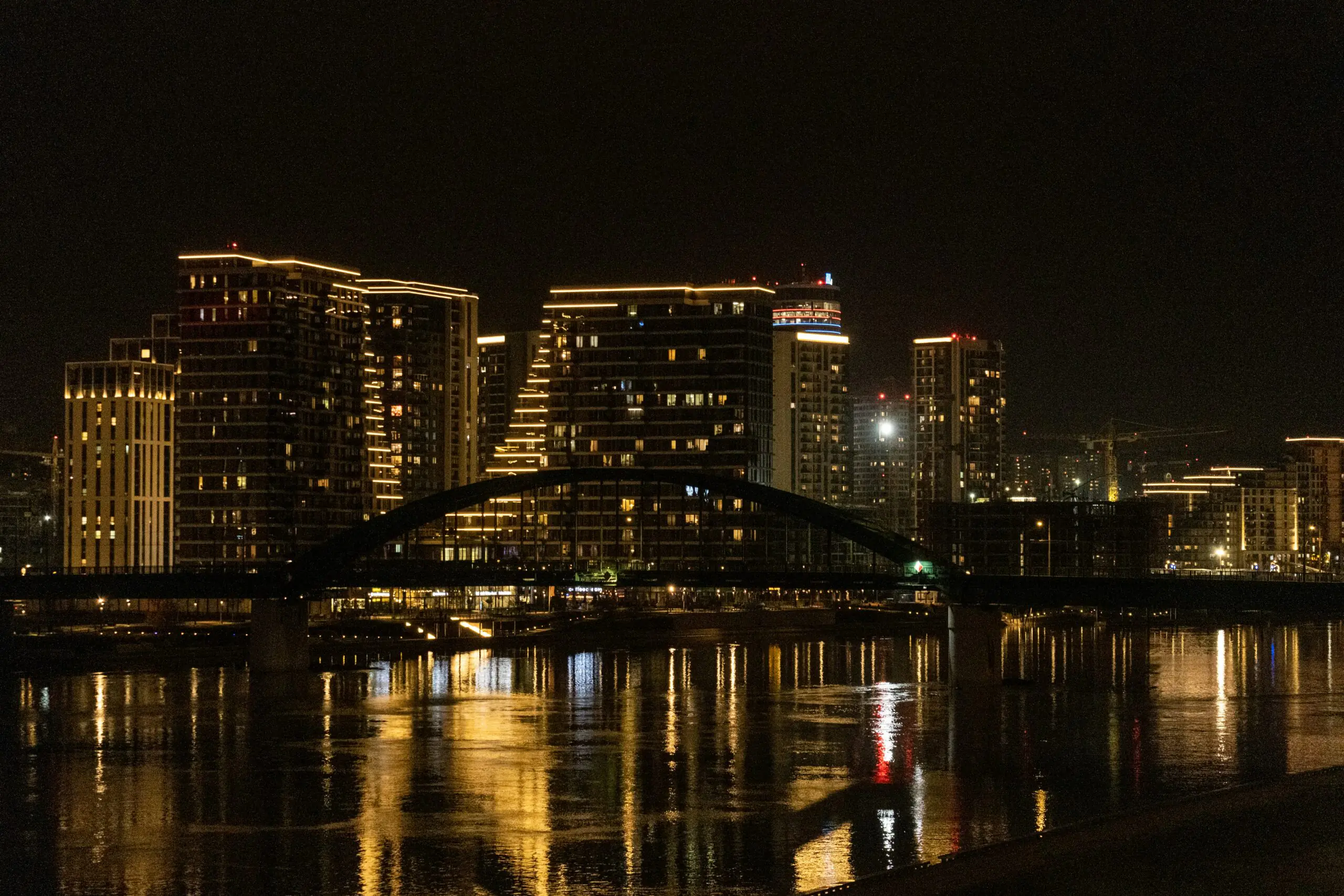
Belgrade has a lot of nightlife, and there are obviously clubs and river clubs if that’s your thing. I think it’s considered one of the hottest party destinations in Europe.
But I personally really like the bar scene: cocktail bars, wine bars, small neighborhood bars – there is a spot for every taste.
When it comes to drinks, rakija is the local specialty, it’s a strong fruit brandy that comes in countless varieties like plum, apricot, or quince. My personal favorite is medovača, a honey rakija, which is a little sweeter and much easier to love. Just don’t drink rakija as a shot, it’s meant to be sipped slowly.
You can also sit in any restaurant and just order drinks. You can stay for a couple of hours. Nobody is going to come and give you the bill because they need the table.
08.Cards & cash
You can pay by card almost everywhere.
But I always have some Serbian dinars with me because small kiosks, some fast food places, and food markets can still be cash only. If you decide to go to Kalenić market, definitely have cash.
Serbia uses dinars, but locals are very quick to convert to euros.
You can just get dinars from an ATM (Halkbank or Alta Bank usually have lower commission on international cards).
For exchanging money, locals use a menjačnica, some of them look a little bit weird and shady, but that doesn’t automatically mean they are bad.
Just check the exchange rate, and I would avoid exchanging money right in the most touristy places like the airport, Knez Mihailova, or Skadarlija just because of less favourable rates.
09.Tipping
Tipping is quite moderate.
You can tip in cash and euros are usually okay as well, although I normally tip in dinars.
There is no need to calculate some crazy percentage every time you have a coffee.
10.Sim Cards
Serbia is not part of the EU, so it means that there will be roaming charges. Consult with your operator, but it might be cheaper to buy a local SIM card or eSIM upon arrival at the airport in the baggage claim area or in the city center at the salons. The two most popular operators are A1 and Yettel. They will ask you for your passport.
11.Airport & Transport
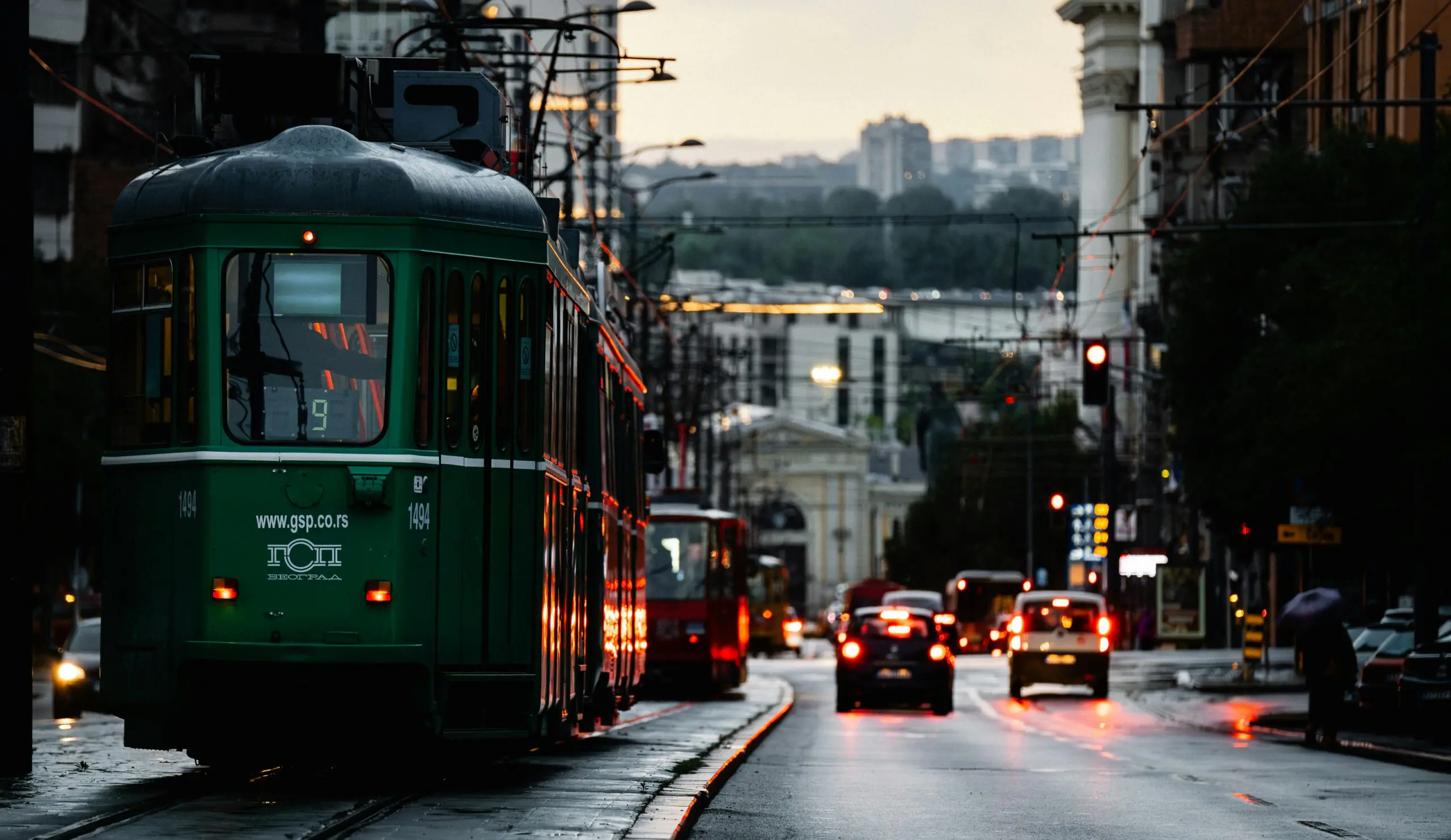
ALL PUBLIC TRANSPORT IN BELGRADE IS FREE (both for locals and tourists)*
Upon arrival at the airport, you have a few options:
- Use free public buses – they stop on the arrivals floor. Use Google Maps to navigate.
- Take a voucher for a taxi at the baggage claim; there will be a fixed rate to get to your hotel. It is more expensive than an app.
- Do not go with random taxi drivers that approach you at the airport; you will definitely overpay.
- Use CarGo or Pink apps. They usually pick you up at the departure area, not arrivals, so you will have to go up one floor.
*There is only one paid minibus A1 from the airport, which costs 400 dinars in cash (app 3 EUR) and goes very quickly straight to the Hilton hotel with minimum stops.
Taxi Apps:
- CarGO: https://appcargo.com/en/aplikacija
- Pink Taxi: https://pinktaxi.info/en/#download_group
Neither Uber nor Bolt is available in Serbia.
12.Parking
If you want to rent a car to go around Belgrade, I would not recommend it. Take advantage of free public transport and affordable taxis. Finding a parking spot in the city center is a nightmare, and locals park chaotically. Driving in Belgrade is definitely an experience and can be very hectic.
If you are driving to Belgrade, you need to consult parking signs on the street to send an sms to pay for parking. There are different zones and tariffs. On Sunday, many streets have free parking.
13.Smoking
One thing you’ll notice pretty quickly in Belgrade is that people smoke a lot. Smoking is allowed mostly everywhere in Serbia, and you’ll often find people smoking inside cafés, restaurants, bars, and terraces. If you’re sensitive to smoke, it’s worth keeping this in mind when choosing where to sit or eat. Non-smoking spaces do exist: there is even a dedicated map.
14.Shopping & souvenirs
For souvenirs, I would personally look for something local rather than the standard tourist stuff.
Serbian design, ceramics, local food like ajvar or craft chocolate, books, small brands etc.
And if you like books, look for Momo Kapor. He was a Serbian writer and artist who wrote a lot about Belgrade and Serbian mentality, and I think his books are actually a really nice way to get to know the culture.
And one final thing.
I don’t think you need to have a huge plan for Belgrade. Some of my favourite days here have basically been: walk somewhere → find a nice coffee place → sit there for too long → walk again → have a nice dinner.
Open the map, see what is around you, and go somewhere that looks interesting.
Hope you will enjoy Belgrade as much as I do!